-
Kala-azar is a slow progressing indigenous disease caused by a protozoan parasite of genus Leishmania
-
In India Leishmania donovani is the only parasite causing this disease
-
The parasite primarily infects reticuloendothelial system and may be found in abundance in bone marrow, spleen and liver.
-
Post Kala-azar Dermal Leishmaniasis (PKDL) is a condition when Leishmania donovani invades skin cells, resides and develops there and manifests as dermal leisions. Some of the kala-azar cases manifests PKDL after a few years of treatment. Recently it is believed that PKDL may appear without passing through visceral stage. However, adequate data is yet to be generated on course of PKDL manifestation
What are Signs & Symptoms of Kala-Azar?
-
Recurrent fever intermittent or remittent with often double rise
-
loss of appetite, pallor and weight loss with progressive emaciation
-
weakness
-
Splenomegaly – spleen enlarges rapidly to massive enlargement, usually soft and nontender
-
Liver – enlargement not to the extent of spleen, soft, smooth surface, sharp edge
-
Lymphadenopathy – not very common in India
-
Skin – dry, thin and scaly and hair may be lost. Light coloured persons show grayish discolouration of the skin of hands, feet, abdomen and face which gives the Indian name Kala-azar meaning “Black fever”
-
Anaemia – develops rapidly
Anaemia with emaciation and gross splenomegaly produces a typical appearance of the patients
What is Post Kala-Azar Dermal Leishmaniasis (PKDL)?
Post Kala-azar Dermal Leishmaniasis is a condition in which Leishmania donovani parasites are found in skin. PKDL develops in some of the Indian kala-azar patients usually 1-2 years or more following recovery of Kala-azar; less commonly without suffering from Kala-azar
What are Signs & Symptoms of PKDL?
Types of morphological lesions:
-
Early hypopigmented macules similar to macular lesions of Lepromatous Leprosy but normally less than 1 cm. Usually occur on face but can affect any part of the body.
-
Later (after a variable period of months or years) diffuse nodular lesions on those macules
-
Erythematous butterfly rash which may be aggravated by exposure to Sunlight; an early sign of PKDL
-
Erythematous papules and nodules which usually occur on face, especially the chin.
-
Lesions progressive over many years , seldom heal spontaneously
Rare manifestations of PKDL include:
-
Multiple lesions coalesce to form larger plaque type lesions
-
Verrucous lesions (hands and feet)
-
Papillomatous lesions (on muzzle area of face, nose, chin, and lips)
-
Hypertrophic lesions (eyelids, nose and lips)
-
Xanthematous rash (orange plaque on axillary fold, cubital fossae, inner thighs, outer canthus of the eye and perioral)
-
Pityriasis rosea like lesions
HIV and Kala-azar co-infection
-
Visceral leishmaniasis (VL) has emerged as an opportunistic infection in HIV and other immunosuppressed patients
-
More than 1000 cases of HIV and VL are reported from 25 countries. However, in India yet not a serious problem
-
VL may be first Opportunistic Infection in asymptomatic HIV-I infected person
-
Also occurs in advanced stage of AIDS
-
All co-infected patients are not symptomatic
-
Diagnosis may be altered because symptoms may be of short duration; fever and spleen may not be marked; Leishmania antibodies may be undetectable.
-
However peripheral blood smears of buffycoat and blood culture may yield good results
-
Response to treatment is poor; drug side effects may be more and relapses may be common
How Kala-azar is transmitted?
- Kala-azar is a vector borne disease
- Sandfly of genus Phlebotomus argentipes are the only known vectors of kala-azar in India
- Indian Kala-azar has a unique epidemiological feature of being Anthroponotic; human is the only known reservoir of infection
- Female snadflies pick up parasite (Amastigote or LD bodies)while feeding on an infected human host.
- Parasite undergo morphological change to become flagellate (Promastigote or Leptomonad), development and multiplication in the gut of sandflies and move to mouthparts
- Healthy human hosts get infection when an infective sandfly vector bites them
Kala-azar Vector in India
-
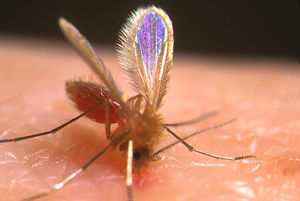
There is only one sandfly vector of Kala-azar in India Phlebotomus aregentipes
- Sandflies are small insects, about one fourth of a mosquito. The length of a snadfly body ranges from 1.5 to 3.5 mm.
- Adult is a small fuzzy, delicately proportionate fly with erect large wings. The entire body including wings is heavily clothed with long hairs.
- Life cycle consists of egg, four instars of larvae, pupa and adult. The whole cycle takes more than a month, however, duration depends on temperature and other ecological conditions
- They prefer high relative humidity, warm temperature, high subsoil water and abundance of vegetation.
- Sandflies breed in favourable micro-climatic conditions in places with high organic matter that serve as food for larvae
- These are ecologically sensitive insects, fragile and cannot withstand desiccation
How Kala-azar is Diagnosed?
- Clinical:
- A case of fever of more than 2 weeks duration not responding to antimalarials and antibiotics. Clinical laboratory findings may include anaemia, progressive leucopenia thrombocytopenia and hypergammaglobulinemia
- Laboratory:
- Serology tests: Variety of tests are available for diagnosis of Kala-azar. The most commonly used tests based on relative sensitivity; specificity and operationally feasibility include Direct Agglutination Test (DAT), rk39 dipstick and ELISA. However all these tests detect IgG antibodies that are relatively long lasting. Aldehyde Test is commonly used but it is a non-specific test. IgM detecting tests are under development and not available for field use.
- Parasite demonstration in bone marrow/spleen/lymphnode aspiration or in culture medium is the confirmatory diagnosis. However, sensitivity varies with the organ selected for aspiration. Though spleen aspiration has the highest sensitivity and specificity (considered gold standard) but a skilled professional with appropriate precaustions can perform it only at a good hospital facility.
-
Sodium Stibogluconate (indigenous manufacture, registered for use & sale)
- Pentamidine Isethionate: (imported, registered for use)
- Amphotericin B: (indigenous manufacture, registered for use and sale)
- Liposomal Amphotericin B: (indigenous manufacture & import, registered for use and sale)
- Miltefosine (imported/ registered for use & sale)
- Drug Policy under Kala-azar Elimination Programme as per recommendations of Expert Committee (2000) – (This drug policy is under review)
- SSG IM/IV 20mg/kg/day X 30 days
in patients with incomplete response with 30 injections
- SSG IM/IV 20mg/kg/day X 30 days
with incomplete response with 30 injections
B. SSG and Miltefosine Failures
- Liposomal Amphotericin B (when final results are available with proven efficacy and safety)


No comments:
Post a Comment